The Crew Motorfest rewards more than raw speed. Its fastest players understand braking lines, vehicle categories, performance parts, nitrous timing, shortcuts and the handling differences between asphalt, dirt, water and air.
The game is also a collection-focused festival. Playlists introduce different branches of car culture, Main Stage activities provide rotating objectives, Summit Contests reward specialized builds, and Ranked Grand Races ask you to adapt to several vehicle classes in one event.
These tips cover new-player progression, current multiplayer systems, upgrading vehicles, drifting, off-road racing, motorcycles, boats, airplanes, Photo Mode and efficient use of O‘ahu and Maui.
Complete Several Playlists Before Grinding
Playlists are the best introduction to Motorfest because each one teaches a different style of driving, vehicle category or cultural theme.
Early Playlist completion gives you:
- Experience with loaned vehicles.
- New events and Custom Mode options.
- Playlist-specific challenges.
- Vehicles, Bucks and cosmetic rewards.
- Knowledge of roads used in multiplayer rotations.
Use Loaned Cars as Test Drives
Many initial Playlist events provide the required vehicle. Pay attention to how each car behaves before spending Bucks on something similar.
Revisit Completed Playlists
After finishing a Playlist, return through Custom Mode. You can change vehicles and event conditions while earning additional progression and learning the route with your own build.
Do Not Buy Every Required Vehicle Immediately
Check whether an event loans the required car or whether a bundle offers better value before purchasing an expensive vehicle.
Build a Useful Starter Collection
A practical collection includes at least one reliable option for:
- Street Tier 1.
- Street Tier 2.
- Hypercar.
- Racing.
- Rally.
- Rally Raid.
- Drift.
- Motocross or motorcycle events.
- Powerboat.
- Air Race.
You do not need the absolute best vehicle in every class immediately. A competent car with upgraded parts can complete most activities.
Learn the Difference Between Vehicle Categories
A Hypercar is not automatically faster in every event. Categories have different performance rules, handling models and terrain strengths.
Street Cars
Street vehicles balance road performance with approachable handling. They are useful for learning braking lines and open-world routes.
Hypercars
Hypercars reach extreme speeds but require earlier braking and smoother steering. Small mistakes become large crashes very quickly.
Racing Cars
Racing vehicles have strong grip and braking on prepared surfaces. They can feel less forgiving on curbs, grass and rough roads.
Rally and Rally Raid
Rally favors technical mixed-surface handling, while Rally Raid vehicles are better suited to open terrain, jumps and rough shortcuts.
Drift Cars
Drift vehicles are designed to maintain controlled oversteer. They should not be judged by normal grip-racing standards.
Alpha GP
These cars demand smooth steering and careful throttle application. Contact with walls or other vehicles can destroy their momentum.
Brake Earlier Than You Think
Most beginner time loss comes from entering corners too quickly, not from accelerating too slowly.
Brake while travelling straight, reduce pressure as you turn and accelerate only when the car can remain within the exit boundary.
Use the Slow-In, Fast-Out Principle
Entering slightly slower often produces a much faster exit. Exit speed matters because it carries down the entire following straight.
Watch Farther Ahead
Do not stare at the rear bumper. Look toward the next checkpoint and the road beyond it so you can plan braking before the corner arrives.
Use the Racing Line as Guidance, Not Law
The displayed line is useful for learning a route, but traffic, weather and vehicle handling may require a different path.
Release the Throttle When the Car Understeers
If the vehicle refuses to turn and moves toward the outside wall, adding more steering usually does not help. Ease off the accelerator and allow the front tires to regain grip.
Countersteer Oversteer Gently
When the rear moves outward, steer slightly toward the slide and reduce throttle. Avoid snapping the stick to full opposite lock unless the rotation is severe.
Do Not Accelerate Fully While Still at Maximum Steering
Powerful cars can break traction when the wheels remain sharply turned. Straighten the vehicle progressively as you squeeze the throttle.
Use Nitrous After the Apex
Nitrous is most efficient when the vehicle already points toward the exit. Activating it before the apex can increase understeer and push the car away from the optimal line.
Save Some Nitrous for the Final Straight
Many races end shortly after a corner or vehicle transition. Keeping a reserve prevents a nearby opponent from passing just before the finish.
Avoid Nitrous in Midair
The vehicle cannot convert all of the boost into useful forward grip while airborne. Activate it after a stable landing.
Use Drafting
Following another vehicle closely reduces aerodynamic resistance in applicable high-speed events. Use the slipstream to close the gap, then move out before hitting the vehicle ahead.
Choose Shortcuts by Vehicle Type
A Rally Raid truck can cross rough ground that would destroy a low Hypercar’s speed. Do not copy every opponent’s shortcut without considering your current machine.
Inspect the Minimap
A straight visual line between checkpoints may contain cliffs, buildings, rivers or dense forest. Check the map before leaving a safe road.
Use Rewind to Learn, Not to Avoid Learning
During solo events, rewind helps test braking points and jump approaches. After identifying the mistake, replay the section with a deliberate correction.
Upgrade Performance Parts Efficiently
Events award performance parts for the category you used. Equip higher-level pieces to raise that category’s performance rating.
The seven common part slots improve different systems such as:
- Brakes.
- Gearbox.
- Engine control.
- Exhaust.
- Motorcore.
- Suspension.
- Tires.
Equip the Highest Level While Progressing
During the initial climb, raw part level usually matters more than perfect affixes. Reach the category cap before spending heavily on specialized rerolls.
Keep Useful Legendary Parts
Do not scrap a valuable set piece merely because another part has a slightly higher rating. Set bonuses can be more important once you reach the maximum level.
Use Multi-Scrap Carefully
Lock valuable pieces before mass-scrapping. Review gold parts, rare affix combinations and incomplete sets first.
Use Part Crafting
Current versions allow lower-tier performance parts to be merged into higher-tier pieces. Use unwanted inventory to improve your collection rather than allowing the mailbox and storage to fill.
Understand Part Affixes
Affixes provide bonuses beyond the basic performance level. Useful choices depend on the activity.
For General Progression
Prioritize bonuses improving loot quantity, loot quality and experience when building your first complete sets.
For Summit Racing
Use affixes that support the actual event: nitrous power, nitrous refill, drag bonuses, score multipliers or terrain-specific performance.
For Feats
A speedtrap build and a slalom build should not necessarily use the same affixes. Create specialized sets rather than forcing one arrangement into every challenge.
Apply Legend Points Deliberately
Legend Points provide account-wide bonuses. Early players benefit from progression and resource-related bonuses, while competitive players may later move points toward nitrous or discipline-specific performance.
Do not spread points evenly simply because every category is available. Concentrated bonuses are easier to notice.
Use Pro Settings Carefully
Pro Settings alter the handling of an individual vehicle. Extreme values copied from another player may behave poorly with your controller settings or driving style.
Change One Setting at a Time
Test the vehicle after each adjustment. Otherwise, you will not know which change improved or damaged the handling.
Start with the Problem
Identify whether the car:
- Understeers on entry.
- Oversteers under power.
- Feels unstable during braking.
- Bottoms out on rough roads.
- Turns too slowly at speed.
Adjust settings to solve a specific problem rather than trying to make every slider look “competitive.”
Adjust Steering Settings Before Every Vehicle
Global steering behavior can have a greater impact than individual Pro Settings. Test:
- Steering sensitivity.
- Steering linearity.
- Deadzone.
- Maximum steering angle.
- Direct Mode.
Use the Smallest Stable Deadzone
Lower deadzones make steering respond sooner. Raise the value only enough to prevent unwanted movement or stick drift.
Do Not Use Maximum Sensitivity Automatically
Very fast steering can make Hypercars and Alpha GP vehicles twitchy. Choose a value that permits precise corrections at high speed.
Grand Race: Learn the Category Order
Grand Races combine several vehicle categories in one long multiplayer event. The planning screen shows the current and upcoming rotation.
Select Every Vehicle Before Matchmaking
Do not wait for the transition countdown to discover that your chosen car is unupgraded. Prepare a competitive favorite for each listed category.
Survive the Opening
Large fields create heavy contact in the first corners. A cautious line can gain more positions than forcing the centre and crashing.
Expect Different Braking Distances After a Switch
The next vehicle may be much heavier, faster or less stable. Use the first corner after a transition to recalibrate rather than assuming it handles like the previous car.
Use Ranked Grand Races Consistently
Ranked play rewards sustained results rather than one lucky victory. Clean finishes and avoiding severe mistakes are more useful than risky all-or-nothing attempts.
Study Upcoming Rotations
Current Grand Race menus display upcoming combinations and modifiers. Use this information to upgrade vehicles before the preferred rotation becomes active.
Demolition Royale: Stay with the Crew
Demolition Royale distributes players into crews and rewards the last surviving team. An isolated vehicle is easier to surround and destroy.
Attack from the Side
Side impacts are easier to control than full-speed head-on collisions. Strike, continue moving and avoid becoming stationary beside the target.
Use the Ultimate at a Meaningful Moment
Do not activate the Ultimate against one weak opponent when several enemies are about to converge on your crew.
Collect Bonuses Without Leaving the Team Behind
A useful pickup is not worth crossing the arena alone while rival crews attack your teammates.
Use Slipstream to Rejoin
Drafting behind another vehicle can help recover distance when separated from the main group.
Summit Contest: Read Every Constraint
Summit activities frequently restrict the manufacturer, category, model or loaned vehicle. Check every event before buying or upgrading something.
Complete All Activities First
A full set of reasonable scores often ranks better than one excellent event with several missing entries.
Return After Building the Correct Sets
Make an initial run, identify the weakest activities and return with specialized parts or a better route.
Feats Need Dedicated Builds
For a speedtrap, prioritize maximum speed and nitrous. For slalom, handling and score bonuses matter more. For escape, learn a route that avoids sharp traffic-filled roads.
Check the Weekly Rewards Before Spending
Do not purchase an expensive vehicle solely for a reward you do not actually need.
Custom Show: Presentation Matters
The Custom Show is about visual appeal rather than race pace. Match the weekly vehicle requirement and build a coherent design.
Use a Strong Theme
A clean motorsport replica, period-correct build or carefully coordinated custom design is easier to understand than random vanities placed on every available surface.
Inspect the Car in Neutral Lighting
Bright festival lights can hide color clashes. Preview the vehicle from several angles before registering it.
Do Not Forget the Interior and Wheels
Body color alone does not create a complete build. Wheels, stance, calipers, tint and interior details affect the final presentation.
Drifting: Initiate Once and Maintain the Slide
Constantly pulling the handbrake interrupts momentum. Use it briefly to initiate, then control the drift with steering and throttle.
Link Corners
Drift scoring improves when one slide flows into the next. Begin transitioning before the first corner is completely finished.
Use Wider Roads for Practice
Learn throttle balance in an open area before attempting narrow mountain routes or high-scoring Drift Paths.
Do Not Chase Angle Alone
An extreme angle looks dramatic but can kill speed and end the combo. Maintain an angle the vehicle can carry through the entire section.
Season 10 Drift Activities
TrackForge currently supports Drift Trial and Drift Path event styles. Drift Trial focuses on points within a time limit, while Drift Path also requires reaching the finish.
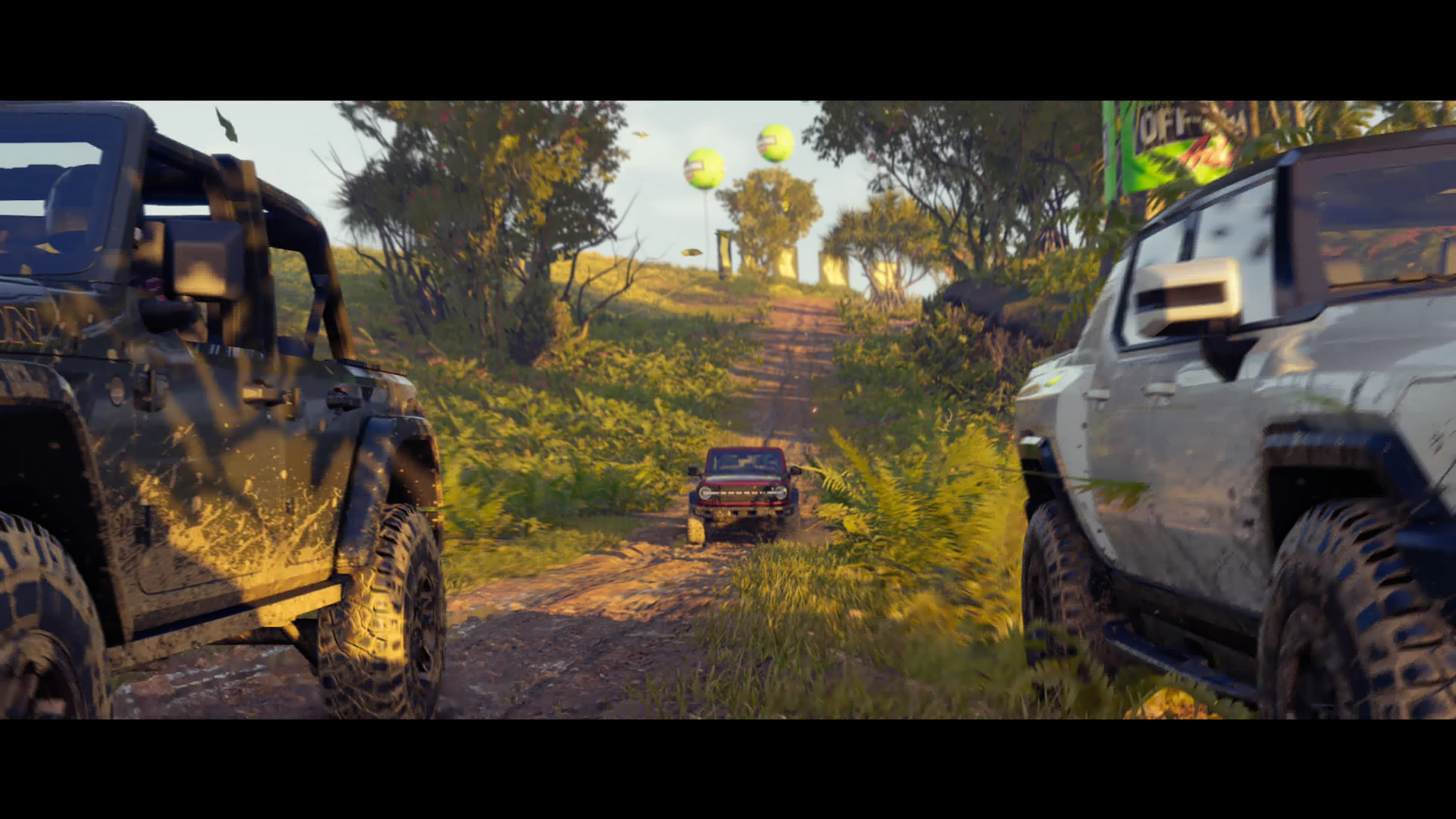
Off-Road Racing: Read the Terrain
Mud, sand, grass, rocks and water slow different vehicles by different amounts. Follow the firmest visible line unless the shortcut clearly saves enough distance.
Land with the Road
Use the left stick to control vehicle attitude in the air. Align the wheels with the direction of the route before landing.
Release Nitrous Before a Bad Jump
Extra speed can send the vehicle beyond the intended landing or into trees. Use nitrous after a controlled touchdown instead.
Use Rally Raid for Open Shortcuts
Rally Raid vehicles tolerate rough direct routes better than low road cars. Even then, avoid large rocks and dense vegetation that stop momentum completely.
Motorcycles: Protect the Front Wheel
Motorcycles are fast and narrow but vulnerable to traffic, curbs and other racers. Avoid squeezing through a gap that may close before you reach it.
Brake Upright
Heavy braking is more stable before leaning into the turn. Braking hard while already at a large lean angle can cause a wide line or crash.
Use Rider Lean for Jumps
Adjust the front wheel in the air and return the bike to a stable landing angle. A long wheelie is not worth losing the next corner.
Boat Racing: Turn Early
Watercraft slide and respond more slowly than cars. Begin setting up before the buoy rather than steering only when you reach it.
Use Trim to Manage the Hull
Raise the bow slightly for speed on calmer water and lower it when the craft becomes unstable or needs a controlled landing.
Aim Through the Centre of Gates
A late correction can produce a large sideways slide. Approach each gate with the boat already aligned.
Watch the Water Surface
Large waves can launch the boat. Reduce steering input before becoming airborne and correct trim rather than fighting the direction aggressively.
Airplane Racing: Bank, Then Pull
To turn efficiently, roll toward the desired direction and add a controlled pitch-up input. Rudder alone produces a slow, awkward turn.
Use Rudder for the Final Alignment
After the large turn is complete, use L1 or R1 to centre the next gate without creating another major bank.
Look Beyond the Current Gate
Begin positioning for the next marker before passing through the current one. Aircraft cover distance too quickly for purely reactive flying.
Trade Altitude for Speed Carefully
A descent builds speed, but diving too steeply creates a difficult pull-up and may cause you to miss the following checkpoint.
Explore O‘ahu and Maui Intentionally
Free drive contains Feats, Photo Quests, Treasure Hunts, collectibles, Playlist challenges and scenic roads.
Use the Map Filters
Hide activity types you are not currently pursuing. A clean map is easier to read than one filled with every available icon.
Fast Travel Near the Goal, Then Drive
Fast travel saves time, but driving the final section reveals shortcuts and roads that may appear in future events.
Use an Aircraft for Scouting
Fly above difficult terrain to identify roads, cliffs and landmarks, then switch to the required ground vehicle using Fast Fav.
Prepare Before Treasure Hunts
Assign useful Fast Fav vehicles and read the clue carefully. A plane helps locate large landmarks; a road or off-road vehicle handles the final approach.
Main Stage: Mix Revisit, Compete and Explore
Main Stage progression rewards different activities rather than one repetitive race.
Revisit
Replay completed Playlist events through Custom Mode and experiment with different cars or conditions.
Compete
Participate in multiplayer and weekly competitive activities such as Grand Race, Demolition Royale and Summit Contest.
Explore
Complete open-world challenges, Feats, Photo Quests and related exploration tasks.
Check Challenges Before Playing
Several objectives can often be completed simultaneously. Equip the required vehicle and choose an activity that advances more than one challenge.
Use TrackForge to Practise Specific Skills
TrackForge provides player-created routes and tools for constructing specialized events.
Use it to practise:
- Repeated braking zones.
- Touge-style mountain corners.
- Drift transitions.
- High-speed circuits.
- Technical city routes.
- Vehicle-category comparisons.
Build Test Tracks Before Changing Pro Settings
A short repeatable route provides better comparison than testing two setups on unrelated roads.
Season 10 Activities
The current season introduces the Motorfest Late Show Playlist, additional Street and Touge TrackForge content, Drift Trial and Drift Path formats, and the Hawaii Grand Tour.
Motorfest Late Show
Treat its events as a varied showcase rather than assuming one tuned vehicle will dominate every segment. Read the episode theme and event rules before selecting a build.
Hawaii Grand Tour
The Hawaii Grand Tour is a long premium time-attack challenge with a substantial entry cost. Do not enter casually.
Before paying:
- Use a vehicle you can drive consistently.
- Verify its performance parts.
- Practise long high-speed runs.
- Set aside enough uninterrupted time.
- Avoid experimental control or Pro Setting changes.
Stories
Open-world Stories use clues rather than ordinary GPS guidance. Study landmarks, road directions and environmental details before searching randomly.
Use Photo Mode for More Than Screenshots
Photo Mode can help inspect liveries, identify environmental landmarks and study the geometry of a difficult jump or corner.
Repair Before a Showroom Shot
Use the repair command to remove dents and broken panels when creating a clean vehicle portrait.
Use Motion and Camera Tilt Sparingly
A small amount creates energy. Excessive effects hide the vehicle and make the image difficult to read.
Try Video Keyframes
Place a starting shot, advance the timeline and move the camera to create a controlled tracking sequence. Preview it before adding more points.
Play with a Crew
A coordinated group makes Playlist events, exploration and multiplayer activities more enjoyable and predictable.
Communicate Vehicle Choices
Before a Grand Race or crew activity, confirm that everyone has suitable vehicles for the required categories.
Use Looking for Crew
Current versions include a feature for finding teammates when your usual friends are unavailable.
Friends Pass
Eligible owners can invite trial-version friends into a Crew under the current Friends Pass system. The owner must lead the group.
Common Beginner Mistakes
- Entering every corner at maximum speed.
- Holding full throttle while understeering.
- Using nitrous before the car is straight.
- Resetting after a minor off-road excursion.
- Buying too many cars before upgrading core categories.
- Scrapping valuable Legendary parts.
- Applying extreme Pro Settings without testing.
- Ignoring steering deadzone and linearity.
- Entering Grand Race without preparing every category.
- Fighting through the centre of the first multiplayer corner.
- Using a road-car shortcut designed for Rally Raid.
- Pulling the handbrake throughout an entire drift.
- Turning boats too late.
- Using rudder as the main airplane turning control.
- Forgetting to assign Fast Fav vehicles.
- Ignoring weekly Main Stage and Summit requirements.
Frequently Asked Questions
What should a beginner do first?
Complete several Playlists, test loaned vehicles and build a small collection covering the most common categories.
What is the fastest way to improve driving?
Brake earlier, watch farther ahead and focus on clean exits rather than maximum entry speed.
When should I use nitrous?
Use it on straights, uphill sections and corner exits after the vehicle is nearly straight.
Should I buy the fastest car immediately?
No. Vehicle category, required event rules, performance parts and driver consistency matter more than the catalog’s highest speed figure.
How do I get better performance parts?
Complete events with the relevant vehicle category, equip higher-level drops and use the crafting or merging system for unwanted parts.
Should I scrap all lower-level parts?
Not immediately. Preserve useful Legendary sets and lock rare pieces before mass-scrapping.
What are Pro Settings?
They are per-vehicle tuning adjustments that change handling characteristics. Modify one value at a time.
How do I stop understeering?
Brake earlier, release the throttle and reduce steering demand until the front tires regain grip.
How do I stop spinning on corner exits?
Straighten the steering and apply throttle progressively instead of immediately using full power.
How do I drift consistently?
Initiate with a brief handbrake or weight transfer, then maintain the slide through throttle control and measured countersteering.
How do I win more Grand Races?
Prepare every category, survive the opening collisions, learn vehicle transitions and prioritize clean finishes over desperate early overtakes.
What is Ranked Grand Race?
It is the ranked progression version of Grand Race, with ranks and divisions based on repeated results.
How should I play Demolition Royale?
Remain near the crew, attack from useful angles, collect bonuses without becoming isolated and save the Ultimate for an important fight.
How do I score higher in Summit Contest?
Complete every activity, build specialized part sets and return to improve the events producing your lowest scores.
How do I control boats better?
Turn earlier, use trim to manage the hull and enter gates already aligned.
How do I turn an airplane?
Bank with the stick, add controlled pitch and use rudder only for fine alignment.
What should be in Fast Fav?
Assign frequently used road, off-road, water and air vehicles, or customize all four slots around your current objective.
What is TrackForge?
It is the custom-track creation and sharing system used to build and play community routes.
What is the Hawaii Grand Tour?
It is a long premium time-attack activity spanning major Hawaiian locations and requiring a large Bucks entry fee.
What is the most important tip?
Drive smoothly. Clean braking, measured steering and controlled acceleration gain more time than repeatedly using maximum throttle and nitrous.
Final Advice
The Crew Motorfest is at its best when you stop looking for one universal “best car.” Each category, event and surface asks for a different skill. A perfect Hypercar line means little in a boat slalom, and a fast grip setup will not automatically produce a high drift score.
Build a varied collection, save useful performance sets and use Custom Mode or TrackForge to practise specific weaknesses. In multiplayer, surviving the first minute often matters more than leading it. In solo events, treat every rewind as an opportunity to identify exactly where the mistake began.
Read our The Crew Motorfest Controls Guide for cars, motorcycles, airplanes, boats, Fast Fav, Photo Mode and complete remapping instructions.
Comments
No comments yet. Be the first to share your thoughts!