The best Fallout 76 tips and tricks have changed considerably over the years. Appalachia now contains far more quests, Public Events, Expeditions, Daily Ops, Legendary gear and progression systems than it did at launch, so advice written for the original version can send a new player in completely the wrong direction.
This beginner friendly guide focuses on useful habits for the current Fallout 76 experience, including the 2026 version of Appalachia. It avoids story spoilers and concentrates on getting stronger without turning the game into a second job.
Do Not Be Afraid of Public Events
New players often see several high level characters at a Public Event and assume they should stay away. In many cases, joining is exactly what you should do.
Public Events are an excellent introduction to group play and can provide experience, equipment, plans, currencies and other rewards. Follow the event objective rather than simply shooting everything you see, and watch what experienced players are doing if the mechanics are unfamiliar.
You also do not need to form a carefully organised squad beforehand. Appalachia's public activities are designed to bring players together naturally.
Join a Casual Public Team Even When Playing Alone
A Public Team does not mean you have agreed to follow three strangers around Appalachia for the evening. Casual Teams are commonly used by players who continue doing their own quests while benefiting from the team's bonuses.
This makes them useful even if you prefer solo exploration. You can still travel, build and quest independently while gaining the advantages associated with being on a team.
Scrap Junk Before Putting It in Your Stash
Junk is enormously useful because crafting, repairs and C.A.M.P. construction consume its components. The problem is weight.
Visit a workbench and use Scrap All Junk before transferring materials into your Stash. A desk fan, typewriter or battered piece of equipment may contain valuable components such as screws, springs or adhesive, so develop the habit of thinking about what an object becomes after scrapping rather than what it looks like on the floor.
Tag Components You Keep Running Out Of
If a weapon modification requires a component you never seem to have, use the crafting interface to mark that material for search. Junk containing a needed component will then be easier to identify while exploring.
This is much more efficient than grabbing every object in a building and discovering ten minutes later that your character can barely walk.
Being Overencumbered Costs More Than Convenience
Once you carry too much, fast travel becomes unavailable and normal movement becomes more restrictive. Sprinting and Action Point management also become a problem at exactly the moment you probably want to reach a Stash box.
Regularly scrap weapons and junk, sell unwanted items and store materials rather than waiting until your inventory becomes completely unmanageable.
Use Contextual Ammo Drops to Your Advantage
Enemies in activities such as Daily Ops can drop ammunition appropriate for the weapon you are using. Loot the bodies rather than immediately leaving when the fighting ends.
If one of your favourite weapons constantly runs dry, understanding which activities return useful ammunition can reduce the amount of time you spend crafting replacements.
Build Your C.A.M.P. for Convenience First
Your first C.A.M.P. does not need to be a five floor mansion overlooking a waterfall. Start with the things that make normal play easier: a Stash, bed, cooking station and the workbenches needed to scrap, repair and modify equipment.
Once the practical side works, start decorating. Fallout 76 has an enormous collection of C.A.M.P. items, but a beautiful home is much more enjoyable when you can actually find your weapons bench.
Your C.A.M.P. Can Become a Useful Travel Point
C.A.M.P. placement is not purely cosmetic. Its position can give you a convenient destination near an area you visit frequently, reducing the amount of travel needed during quests and resource runs.
Consider accessibility and nearby resources before committing to a location. You can always become an Appalachian architect later when you know which part of the map you actually enjoy living in.
Do Not Hoard Every Weapon You Find
Keeping twelve rifles because one of them might become useful eventually is a reliable way to fill your storage. Scrap ordinary weapons you do not need to learn modifications and recover materials, sell appropriate extras or otherwise clear them out.
Legendary equipment deserves more thought because the current Legendary Crafting system makes unwanted Legendary items potentially valuable even when their base weapon is useless to your character.
Think Before Scrapping Legendary Gear
Scrapping Legendary items can provide Legendary Scrip and gives you a chance to obtain a Legendary Mod or permanently learn how to craft one of the item's effects.
That means a terrible weapon can still carry an excellent Legendary effect. Check its stars before scrapping it so you understand what you have a chance to learn or receive.
Loose Legendary Mods can be traded, but applying one through Legendary Crafting makes the resulting item character bound. Plan valuable gear before modifying it.
Unique Weapons Are More Flexible in the Current Game
The September 2026 update expanded Legendary Crafting for unique equipment. Unique weapons and armor can now have their Legendary Mods changed, and a fourth Legendary Mod can be added where applicable.
That makes interesting named equipment worth reconsidering instead of immediately discarding it because its original Legendary effects do not fit your build.
Pick Perks for a Build, Not Just Individual Good Cards
Fallout 76 uses S.P.E.C.I.A.L. attributes together with Perk Cards, and the strongest characters usually have a clear idea of what their equipment and cards are trying to accomplish.
If your favourite weapon is a particular type of rifle, heavy weapon, shotgun or melee weapon, look for perks that support that style. Mixing unrelated damage perks because each sounds useful can leave all of your weapons weaker than a focused setup.
Use S.P.E.C.I.A.L. Loadouts
You do not have to force one character build to handle every activity. S.P.E.C.I.A.L. Loadouts let you maintain different arrangements for different jobs.
A particularly useful approach is keeping one combat focused setup and another for crafting or C.A.M.P. work. Swap when appropriate rather than permanently occupying valuable combat slots with perks you only need at a workbench.
Legendary Perks Start at Level 50
Reaching level 50 opens another layer of character building through Legendary Perks. Additional Legendary Perk slots unlock at higher milestones until you eventually have six.
Unused normal Perk Cards can also become Perk Coins, which are used to improve Legendary Perk Cards. Do not worry about perfecting this system during your first few hours. It becomes relevant once your normal build has had time to take shape.
Learn What V.A.T.S. Costs
V.A.T.S. is powerful, but attacks consume Action Points. Sprinting also uses AP, so arriving at a fight with an empty bar can interfere with a V.A.T.S. focused build.
If V.A.T.S. is central to your playstyle, consider your AP usage as part of combat rather than treating it as an unlimited targeting button. Critical focused builds can become extremely effective once their perks and equipment begin working together.
Turn On Pacifist Mode if PvP Does Not Interest You
If you are exploring Appalachia for quests, building and cooperative events rather than fighting other players, check the Pacifist Mode option in Gameplay settings.
Pacifist Mode prevents you from damaging other players and helps avoid accidentally initiating unwanted PvP through an enthusiastic trigger pull during a crowded encounter.
Use Corpse Highlighting
Large Public Events can leave bodies scattered across dark grass, ruined buildings and piles of debris. Fallout 76 includes corpse highlighting options that make fallen enemies easier to locate.
This is especially useful after hectic events where leaving without looting can mean abandoning ammunition and other useful rewards simply because you cannot see where an enemy landed.
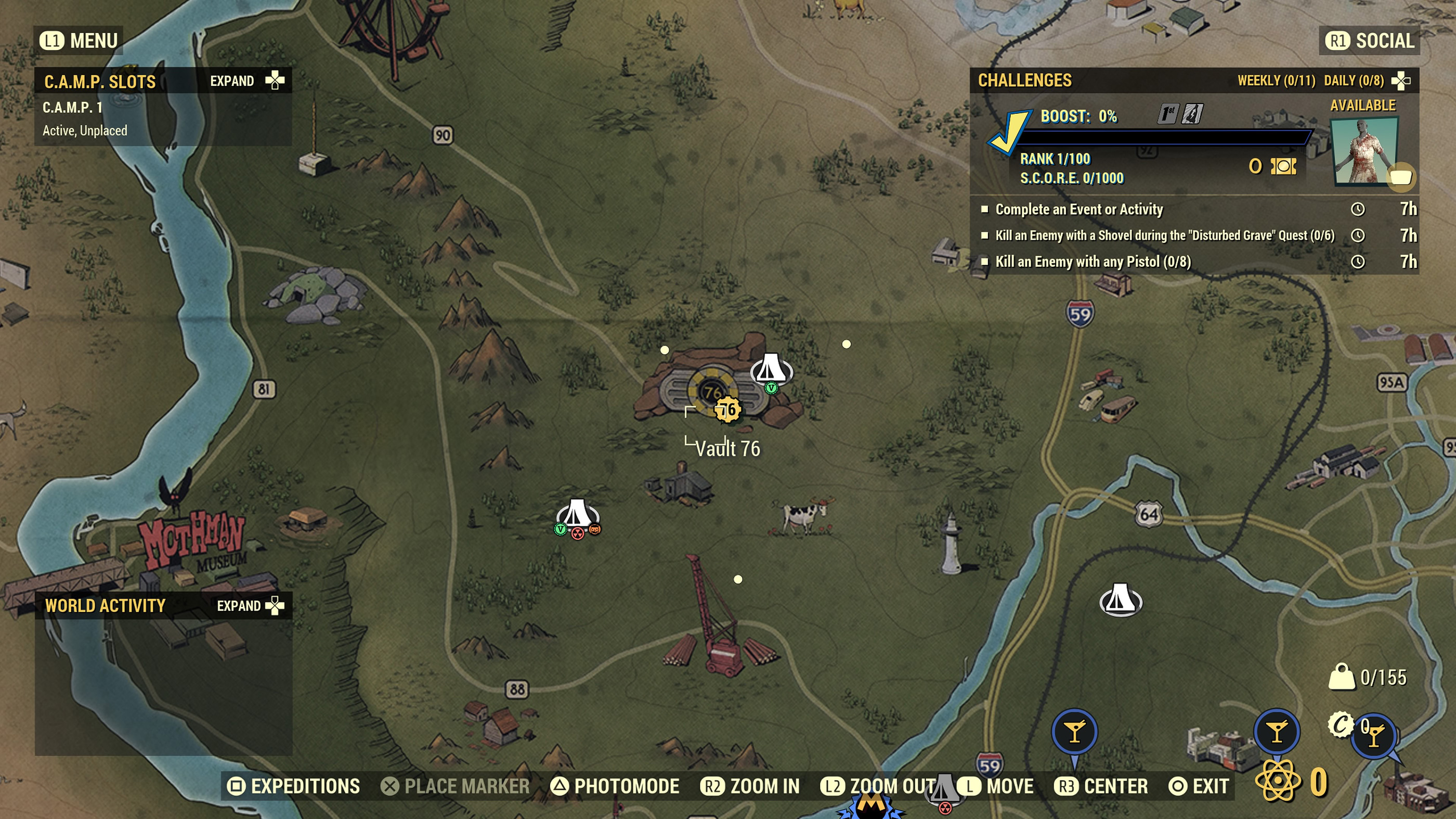
Check Daily and Weekly Challenges
Current Seasons award S.C.O.R.E. through gameplay and challenges, which contributes to Season progression and the Tickets used to claim available rewards.
Look at Daily and Weekly Challenges before beginning a session. Many ask you to perform activities you may already be planning, so knowing the requirements in advance can turn ordinary exploration into Season progress without creating extra work.
Understand Current and Legacy Seasons
Fallout 76 now runs a current Season alongside a returning Legacy Season. Both use the same pool of Tickets, giving you a choice about where those Tickets are spent.
The difference is that Legacy Season rewards must be claimed in sequence. Before spending a large pile of Tickets, browse both reward tracks and decide which items matter to you rather than automatically buying the first thing available.
Do Not Ignore Daily Ops and Expeditions Forever
You do not need to rush into every advanced activity immediately, but Daily Ops and Expeditions become valuable parts of progression once your character is prepared. They can provide experience, equipment and useful crafting resources, including Legendary Modules.
Read the activity conditions before entering. Daily Ops in particular can feature enemy mutations and objectives that reward adapting your approach rather than bringing exactly the same strategy every time.
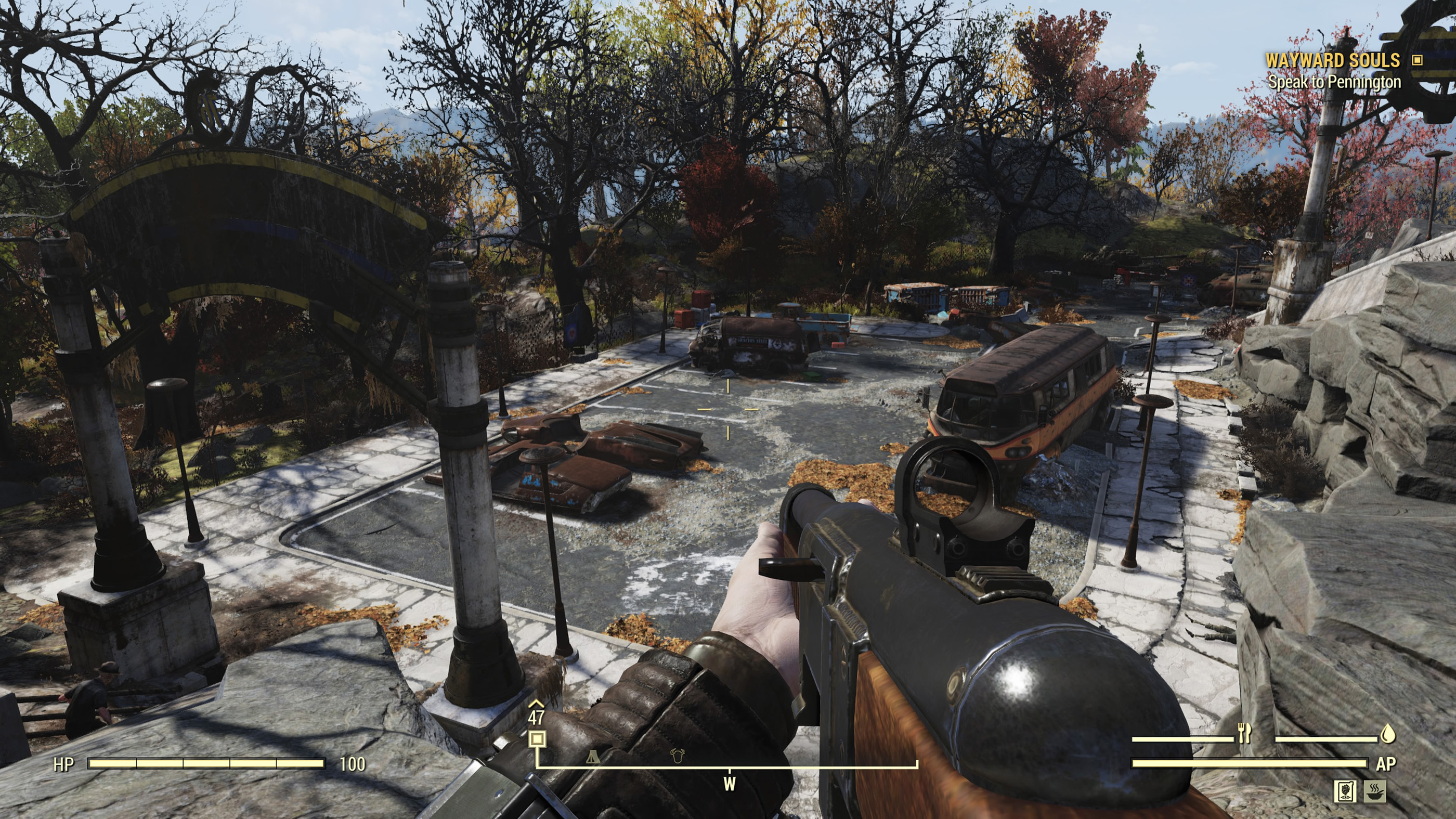
Use Fast Travel Intelligently
Fast travel is convenient, but repeatedly jumping across Appalachia can eat into your Caps. Use free travel opportunities and nearby destinations intelligently, then cover short distances on foot when it makes sense.
Walking also has an advantage that no loading screen can provide: you find locations, random encounters, junk and quests that are easy to miss when you teleport directly from objective to objective.
Do Not Rush Appalachia
Fallout 76 is unusually easy to turn into a checklist because events, challenges, quests and Season objectives are constantly competing for attention. You do not need to do all of them.
Follow a quest until something interesting distracts you. Join a Public Event because half the server suddenly appears there. Build an unnecessarily elaborate porch. Wander into a town because you saw a strange light in the distance.
Character optimisation matters eventually, but discovering what is actually hiding around Appalachia is still one of the best reasons to leave the safety of your C.A.M.P.
Comments
No comments yet. Be the first to share your thoughts!